Sig P320 Manual Safety Kit: A Comprehensive Overview (02/07/2026)

Today, converting a P320 without a manual safety is achievable with kits like the MSAFE-T, available from SigMech.store and other retailers, redefining safety and excellence.
What is a Sig P320 Manual Safety Kit?
A Sig P320 Manual Safety Kit is a collection of components designed to add an external, manual safety lever to Sig Sauer P320 pistols that were originally manufactured without one. These kits, such as the popular MSAFE-T kit from ModDev and now available through SigMech.store, fundamentally alter the firearm’s operation by introducing a mechanical safety that the user actively engages and disengages.
Essentially, these kits provide the necessary parts and, often, specialized tools – like jigs – to convert a P320’s Fire Control Unit (FCU) to accommodate a manual safety. This conversion isn’t a simple drop-in process; it requires a degree of gunsmithing skill and involves disassembly beyond a standard field strip. The primary goal is to provide users with an additional layer of control and peace of mind, offering a tangible safety mechanism beyond the inherent safety features already present in the P320 design.
Why Add a Manual Safety to a P320?
Adding a manual safety to a Sig P320 addresses a common concern for some shooters: the desire for an additional, visible, and tactile safety mechanism. While the P320 boasts inherent safety features like a striker safety and a trigger safety, a manual safety provides a positive, user-controlled safeguard against accidental discharge. This is particularly appealing to individuals accustomed to firearms with manual safeties or those seeking enhanced security during carry.
Furthermore, a manual safety can offer peace of mind during handling and storage. It allows users to visually and physically confirm the firearm is safe before manipulation or when stored. The conversion caters to preferences for traditional safety designs and can be crucial for users operating in environments where a manual safety is mandated or preferred. Ultimately, it’s about increasing user confidence and control over the firearm’s operation.
Compatibility: Which P320 Models are Compatible?
The MSAFE-T kit, and similar conversion kits, are specifically designed for P320 models not originally equipped with a manual safety. This means it’s intended for P320s that came from the factory as striker-fired only. Compatibility extends across various P320 configurations, including full-size, carry, and compact models, as well as those chambered in 9mm, .40 S&W, and .45 ACP.
However, it’s crucial to verify compatibility with your specific Fire Control Unit (FCU). The kits generally work with most P320 FCUs, but variations exist. It’s essential to confirm that your FCU hasn’t been previously modified or altered in a way that would interfere with the installation. Always consult the kit manufacturer’s compatibility list before purchasing to ensure a proper fit and function.
The MSAFE-T Kit: A Detailed Look
The ModDev MSAFE-T kit represents a comprehensive solution for adding a manual safety to compatible Sig P320 models. It’s not simply a drop-in part; rather, it’s a set of precision-engineered templates and specialized tools designed to facilitate the necessary modifications to the P320’s Fire Control Unit (FCU). The kit aims to provide a safe and reliable method for converting non-manual safety P320s.
Central to the MSAFE-T system are the jigs that guide the user through the precise milling and fitting required to accommodate the manual safety lever and associated components. These jigs ensure accuracy and minimize the risk of damaging the FCU during the conversion process. The kit is available through SigMech.store and other retailers, offering a pathway to enhanced control.
Components Included in a Typical Kit
A standard Sig P320 manual safety kit, such as the MSAFE-T, generally includes several key components. Primarily, it features the manual safety lever itself – the external control that the user will operate. Crucially, the kit provides a safety stop, an internal component that interacts with the lever to prevent unintended discharge.
Beyond these core parts, a comprehensive kit will contain specialized jigs and templates. These are essential for accurately modifying the P320’s frame and FCU to accept the new safety features. Often, a user manual and instructions are included, guiding the installer through the process. Some kits may also include necessary pins, springs, and other small hardware required for proper installation and function.
Tools Required for Installation
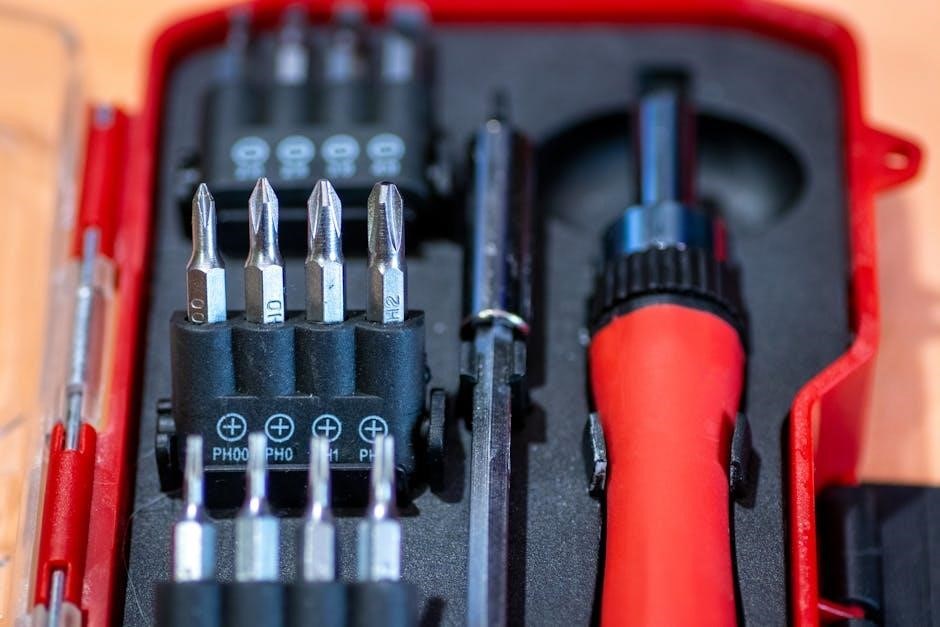
Installing a Sig P320 manual safety kit necessitates a range of tools beyond basic firearm maintenance supplies. A high-quality gunsmithing screwdriver set is paramount, with various bit sizes to accommodate the kit’s components. Pin punches, specifically those made of brass or nylon, are crucial for safely removing and installing pins without damaging the firearm.
Furthermore, a hammer – preferably a nylon-faced one – is needed for gentle adjustments. The MSAFE-T kit, and similar options, often require specialized jigs, which may necessitate clamps or a vise for secure positioning during modification. A roll pin starter punch can be incredibly helpful. Finally, safety glasses are non-negotiable, alongside a well-lit and organized workspace to ensure a precise and safe installation process.
Installation Process: Step-by-Step Guide
The installation of a Sig P320 manual safety kit is a complex process demanding meticulous attention to detail. It begins with complete disassembly of the P320, extending beyond a standard field strip. Utilizing the MSAFE-T jig (or equivalent), carefully follow the provided instructions for modifying the frame.
Next, install the manual safety lever, ensuring proper alignment and function. Subsequently, the safety stop must be precisely positioned and secured. Reassembly requires reversing the disassembly steps, paying close attention to spring placement and pin alignment. A thorough function check is essential after reassembly, verifying the safety engages and disengages correctly, and that the trigger operates as intended. Improper installation can lead to malfunctions; professional gunsmithing is recommended if unsure.
Disassembly and Preparation
Before initiating the manual safety installation, complete disassembly of your Sig P320 is paramount. This extends significantly beyond a typical field strip, requiring removal of the slide, barrel, and internal components, including the fire control unit (FCU). Ensure a clean and well-lit workspace, utilizing a proper gunsmithing mat to protect the firearm’s finish.
Carefully document the disassembly process, perhaps with photographs, to aid in reassembly. Inspect all parts for wear or damage, replacing as needed. The frame will require modification to accommodate the manual safety components; the MSAFE-T jig (or similar) is crucial for accurate and safe alterations. Prepare all necessary tools – punches, screwdrivers, and potentially specialized jigs – before proceeding.
Installing the Manual Safety Lever
With the frame prepared, carefully install the manual safety lever. Utilizing the MSAFE-T jig is highly recommended to ensure proper alignment and prevent damage during this critical step. The lever typically inserts through a modified port in the frame, requiring precise fitting and potentially some light filing to achieve a smooth, secure engagement.
Ensure the lever moves freely through its full range of motion – from “fire” to “safe” – without binding. Pay close attention to the detent mechanism, verifying it positively locks the lever into each position. Improper installation here can lead to accidental discharge or a non-functional safety. Test the lever’s action repeatedly before proceeding to the next stage of installation.
Installing the Safety Stop

The safety stop, a crucial component of the MSAFE-T kit, prevents the slide from cycling when the manual safety is engaged. Installation requires careful placement within the fire control group, often necessitating minor modifications to the existing components. The jig provided in the kit is instrumental in accurately positioning the stop, ensuring it interacts correctly with the trigger and sear.
Verify the safety stop effectively blocks the trigger’s movement when the manual safety is on. A proper installation will prevent any forward motion of the slide, even with deliberate effort. Double-check for any interference with other internal parts, as this could lead to malfunctions. Thoroughly test this function before reassembling the firearm, prioritizing safety and reliable operation.
Reassembly and Function Check
Following the installation of the manual safety lever and safety stop, carefully reassemble the P320, ensuring all components are correctly seated. Prioritize a methodical approach, referencing the kit’s instructions and potentially online video guides for clarity. Once reassembled, conduct a comprehensive function check in a safe environment.

Engage and disengage the manual safety multiple times, verifying it consistently locks the slide and prevents trigger movement. Perform several dry-fire tests with the safety both on and off, observing for any unexpected behavior. Confirm the trigger reset functions correctly. Installation requires beyond field-strip disassembly, so meticulous attention is vital. If any issues arise, immediately disassemble and re-examine your work;
Potential Issues During Installation
Installing a Sig P320 manual safety kit, while achievable, isn’t without potential challenges. Improper installation is a primary concern, potentially leading to malfunctions or unsafe operation. Difficulty seating the safety stop correctly is frequently reported, requiring precise alignment and sometimes minor fitting adjustments. Some users encounter issues with the safety lever interfering with the slide’s movement, necessitating careful adjustment or polishing.
Another potential problem is damaging the Fire Control Unit (FCU) during disassembly, particularly for those unfamiliar with P320 internals; Always proceed slowly and deliberately. Installation of these parts requires disassembly beyond field stripping, increasing the risk. If encountering significant resistance or uncertainty, consult a qualified gunsmith to avoid irreversible damage or compromise safety.
Safety Considerations and Warnings
Modifying your Sig P320 with a manual safety kit introduces significant responsibility. Always prioritize safety throughout the entire process. Disassemble the firearm only when you are certain it is unloaded, and double-check to confirm. Improper installation can lead to malfunctions, potentially causing unintended discharge and serious injury.
If you lack experience with firearm disassembly and modification, seek assistance from a qualified gunsmith. Never attempt this installation if you are unsure of any step. Thoroughly test the functionality of the manual safety after installation, ensuring it consistently engages and disengages correctly. Regularly inspect the safety mechanism for any signs of wear or damage. Remember, altering a firearm can have legal implications; ensure compliance with all applicable laws.
Legal Implications of Adding a Manual Safety
Adding a manual safety to a Sig P320, particularly to a model not originally equipped with one, carries potential legal ramifications that demand careful consideration. Federal regulations generally permit modifications to firearms as long as they don’t alter the firearm’s classification as a National Firearms Act (NFA) item. However, state and local laws vary significantly.
Some jurisdictions may have restrictions on altering firearm components or require specific permits for such modifications. It’s crucial to research and understand the laws in your specific location before undertaking any installation. Modifying a firearm could potentially impact its compliance with state-specific handgun roster requirements. Failure to comply with applicable laws could result in criminal penalties. Consult with a legal professional specializing in firearms law to ensure full compliance.
Where to Purchase Sig P320 Manual Safety Kits
Several retailers offer Sig P320 manual safety kits, catering to owners seeking to enhance their pistol’s safety features. The primary source for the MSAFE-T kit is WWW.SIGMECH.STORE, where the kits are readily available for direct purchase. Lead times can vary, potentially up to two weeks, though often shipments are faster.
Additionally, other online firearms parts retailers may stock these kits, offering a broader range of options and potential price comparisons. Some gunsmiths also offer the kits directly or can source them for you. It’s possible to send your existing P320 to certain vendors for professional installation of the kit. Always verify the retailer’s reputation and ensure they are authorized to sell firearm parts.

Cost Analysis: Kit Prices and Installation Fees
The financial aspect of adding a manual safety to a Sig P320 involves both the kit’s purchase price and potential installation costs. As of late 2023 and early 2024, the MSAFE-T kit itself represents a significant portion of the expense. Expect to invest approximately $150 ⎯ $250 for a complete kit, encompassing all necessary components and templates.
However, the total cost doesn’t end there. Professional installation, due to the complexity and required disassembly, can add substantially to the overall price. Gunsmith fees typically range from $100 to $300, depending on the gunsmith’s hourly rate and the specific location. DIY installation is possible, but requires significant technical skill and carries inherent risks. Therefore, budgeting $250 ⎯ $550 is a realistic expectation for a fully completed conversion.
Alternative Safety Options for the P320
While adding a manual safety via kits like the MSAFE-T is a popular choice, several alternative approaches enhance P320 safety. Consider improved trigger control training; mastering proper technique significantly reduces accidental discharge risks. Upgrading the trigger spring kit, like those offered by MCARBO, can refine trigger pull characteristics, promoting safer handling.
Another option involves utilizing retention holsters, which physically secure the firearm and prevent unauthorized access. Furthermore, focusing on consistent safe gun handling practices – always keeping your finger off the trigger until ready to fire – remains paramount. For those seeking enhanced grip security, textured grips, such as those from Right Guard Xtreme, offer improved control. Ultimately, a layered approach combining training, accessories, and mindful handling provides the most comprehensive safety solution for your P320.
Resources and Further Information
For detailed information on the MSAFE-T kit and its installation, visit WWW.SIGMECH.STORE. Numerous video tutorials, including updated guides, are available online demonstrating the installation process; search for “P320 MSAFE-T installation” on video platforms. MCARBO (https://mcarbo.com/) provides resources on trigger spring kits and related upgrades.

Sig Sauer’s official website (https://www.sigsauer.com/) offers owner’s manuals and safety information for all P320 models. Online forums dedicated to Sig Sauer firearms, such as those on Reddit and dedicated gun enthusiast websites, provide valuable user experiences and troubleshooting advice. Remember to always consult with a qualified gunsmith if you are unsure about any aspect of the installation or modification process. Prioritize safety and responsible gun ownership by staying informed and seeking professional guidance when needed.