The Obligation of Hajj: “Allah Has Guided His Pilgrimage”
Hajj, a cornerstone of Islam, became obligatory following Prophet Muhammad’s final pilgrimage in 632 AD․ It’s a sacred duty for able-bodied Muslims with financial capacity․
This annual pilgrimage to Mecca represents a profound spiritual journey, echoing the path of the Prophet and fulfilling a divine command․
Historical Foundations of Hajj
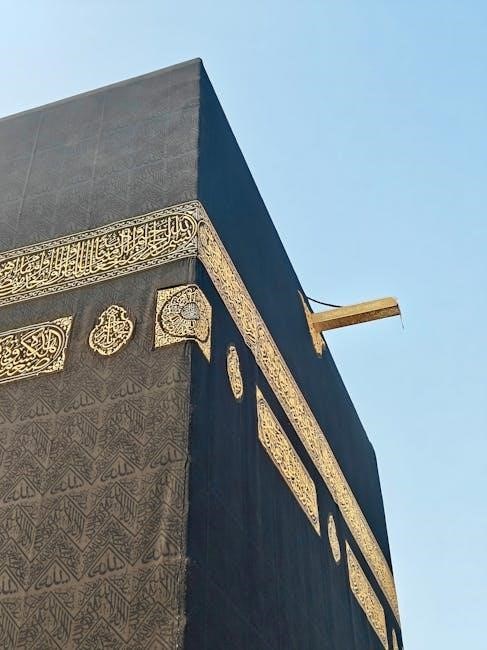
The origins of Hajj are deeply rooted in the history of Prophet Ibrahim (Abraham) and his family․ Islamic tradition recounts that Allah commanded Ibrahim to build the Kaaba in Mecca, establishing it as a house of worship for monotheism․ This foundational act signifies the beginning of the pilgrimage’s sacred geography․
Before Islam, the Kaaba was a sanctuary revered by various Arab tribes, though its worship had become corrupted with polytheism․ Prophet Muhammad, upon receiving his divine message, purified the Kaaba, removing idols and restoring its original purpose – the worship of the one God, Allah․
The Quran emphasizes that Hajj is a continuation of a tradition established by Ibrahim, linking the current practice to the earliest monotheistic roots․ The pilgrimage’s rituals, such as circumambulating the Kaaba (Tawaf) and walking between Safa and Marwa (Sa’i), commemorate events in Ibrahim’s life and the struggles of his family, particularly his wife Hagar․ These historical narratives imbue Hajj with profound spiritual significance, connecting pilgrims to a lineage of faith stretching back millennia․
Allah’s guidance is central to understanding the historical development and enduring importance of Hajj․
Prophet Muhammad’s Farewell Pilgrimage (632 AD)
In 632 AD, Prophet Muhammad undertook his final pilgrimage to Mecca, a journey of immense spiritual and practical importance for the nascent Muslim community․ This pilgrimage, known as the Farewell Pilgrimage (Hajjat al-Wada’), served as a comprehensive demonstration of the Hajj rituals, solidifying their practice for generations to come․
During the pilgrimage, the Prophet delivered a powerful sermon from Mount Arafat, outlining core Islamic principles and emphasizing the sanctity of life, property, and honor․ This sermon, considered a cornerstone of Islamic jurisprudence, reinforced the moral and ethical foundations of the faith․
The completion of this Hajj marked a pivotal moment, as it formally established Hajj as one of the five pillars of Islam, obligatory for all able-bodied Muslims who possess the financial means․ Allah’s guidance, revealed through the Prophet, ensured the Hajj’s enduring legacy as a transformative spiritual experience․ The Prophet’s example provided a blueprint for future pilgrims, ensuring the preservation of its sacred traditions and its profound connection to divine will․
This pilgrimage remains a testament to the Prophet’s devotion and Allah’s unwavering guidance․
The Five Pillars of Islam and Hajj’s Significance
Hajj stands as one of the five pillars of Islam – the foundational practices for all Muslims․ These pillars, including the declaration of faith (Shahada), prayer (Salat), charity (Zakat), and fasting during Ramadan (Sawm), collectively define Muslim life and devotion to Allah․
Hajj’s significance lies in its unique ability to embody these pillars․ It demands financial sacrifice (Zakat), physical endurance (Salat through ritual movements), spiritual purification (Sawm through abstinence), and a reaffirmation of faith (Shahada through intention and action)․ Allah has guided Muslims to perform this pilgrimage as a demonstration of submission and gratitude․
The pilgrimage fosters a profound sense of unity and equality among Muslims from diverse backgrounds, all standing before Allah as equals․ It’s a journey of self-reflection, repentance, and renewal, strengthening one’s connection with the divine․ Hajj isn’t merely a ritual; it’s a transformative experience, a testament to faith, and a fulfillment of a divine obligation, guided by Allah’s will and the example of Prophet Muhammad․
This pillar is a cornerstone of Islamic practice․
The Rituals of Hajj: A Step-by-Step Guide
Hajj rituals, meticulously followed by millions, are a physical and spiritual journey Allah has guided․ These acts retrace the Prophet’s steps, seeking divine acceptance․
Each step, from Ihram to the final Tawaf, embodies devotion and submission․
Ihram: Entering a State of Sanctity
Ihram marks the initial step of Hajj, signifying a pilgrim’s entry into a sacred state, spiritually preparing them for the journey Allah has guided․ This involves specific rituals and restrictions, demonstrating complete devotion and submission to God’s will․
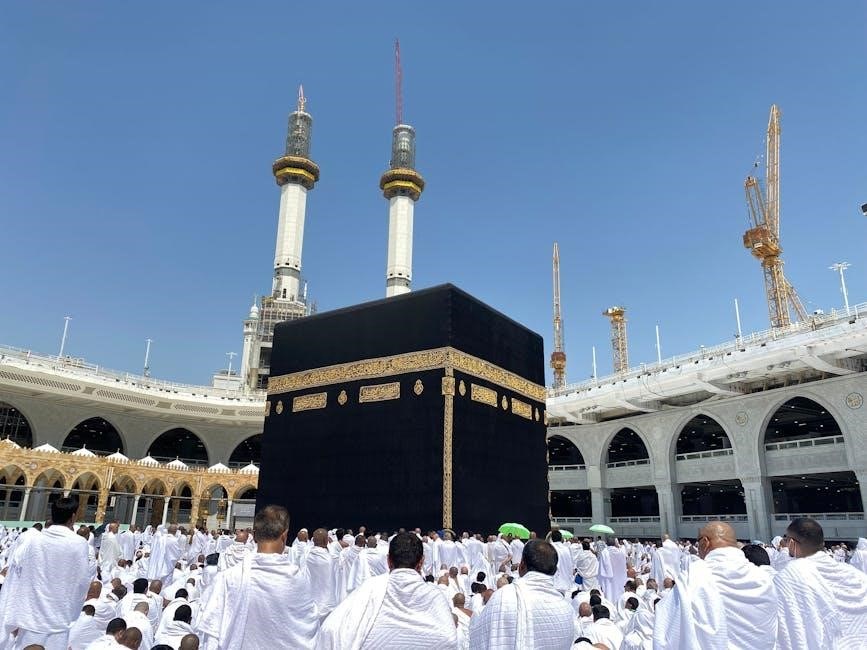
Pilgrims shed their worldly attire, donning simple, white garments – two seamless cloths for men and modest clothing for women – symbolizing purity and equality before Allah․ This act transcends social status, uniting all in a shared spiritual experience․ Certain actions, like cutting hair or nails, and the use of perfumes, are prohibited during Ihram, fostering self-discipline and focusing the pilgrim’s intention solely on worship․
The declaration of Niyyah, the intention to perform Hajj, is crucial․ It’s a heartfelt commitment, acknowledging that this pilgrimage is undertaken solely for the pleasure of Allah․ Ihram isn’t merely a set of rules; it’s a transformative process, preparing the heart and soul for the profound spiritual experiences that lie ahead, guided by divine grace․

Tawaf: Circumambulating the Kaaba
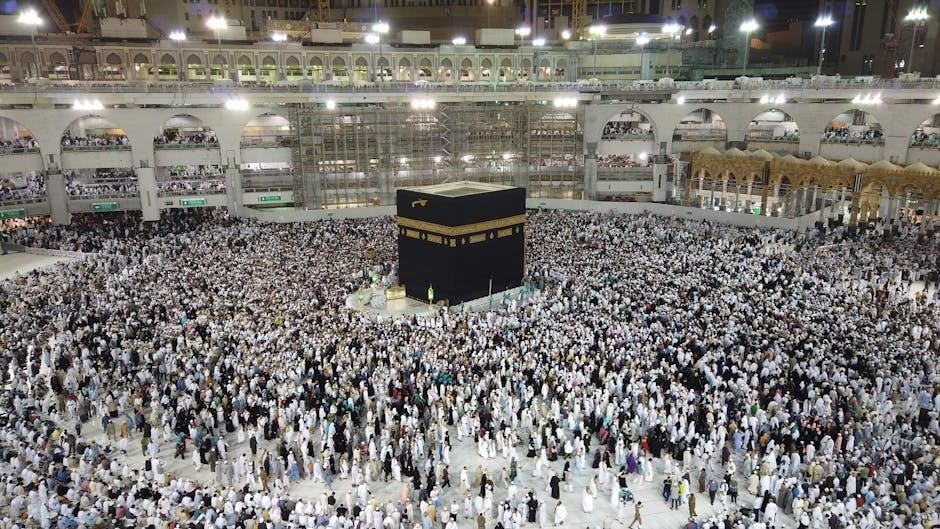
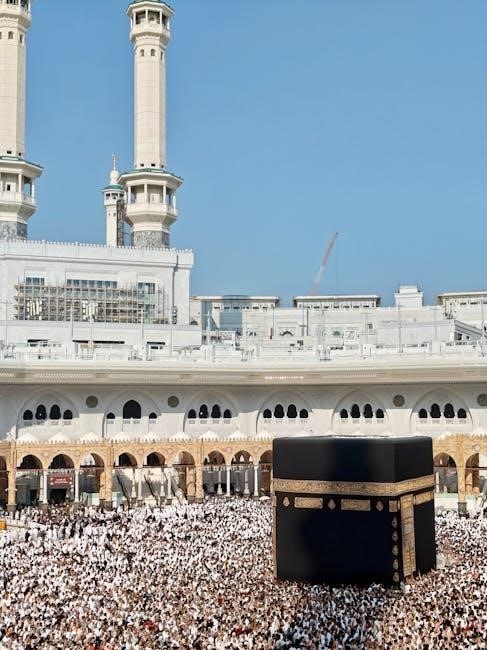
Tawaf, the circumambulation of the Kaaba, is a central ritual of Hajj, a physical and spiritual act of worship demonstrating devotion to Allah․ Pilgrims circle the Kaaba seven times in an anti-clockwise direction, renewing their commitment and seeking closeness to the Divine․ This act symbolizes the unity of Muslims and their collective worship of one God, Allah․
Each circuit of Tawaf is a testament to faith, a rhythmic expression of love and reverence․ Pilgrims often recite prayers and supplications during Tawaf, seeking forgiveness and blessings․ The Kaaba, believed to be the first house of worship built for Allah, serves as the focal point, drawing pilgrims into a state of profound contemplation․
Allah has guided believers to this sacred space, and Tawaf embodies a longing to be in His presence․ It’s a powerful reminder of the shared heritage and universal brotherhood of Islam, a journey of the heart guided by faith and divine grace․
Sa’i: Walking Between Safa and Marwa
Sa’i, the ritual of walking seven times between the hills of Safa and Marwa, powerfully reenacts the desperate search of Hagar (Hajira), Prophet Ibrahim’s wife, for water for her son Ishmael (Ismail)․ This act of devotion embodies unwavering faith in Allah’s provision and guidance, even in the face of immense hardship․
Pilgrims emulate Hagar’s frantic yet hopeful steps, demonstrating their trust in Allah’s mercy and ability to provide․ The distance between Safa and Marwa is approximately 450 meters, and each round trip is a testament to resilience and surrender to the Divine will․
Allah has guided Hagar, and through Sa’i, pilgrims connect with her story, recognizing the importance of perseverance and reliance on Allah․ The Zamzam well, miraculously provided by Allah, symbolizes His boundless blessings and serves as a source of refreshment for pilgrims, a tangible sign of His grace․
Standing at Arafat: The Pinnacle of Hajj
Standing at Arafat, known as Wuquf, is the central rite of Hajj, a moment of profound spiritual intensity where pilgrims stand in supplication from noon until sunset on the ninth day of Dhul-Hijjah․ This is considered the most important pillar of the pilgrimage, a time of intense devotion and seeking forgiveness from Allah․
Pilgrims believe that Allah has guided them to this sacred plain, mirroring the gathering on the Day of Judgment․ It’s a moment for heartfelt repentance, reflection, and unwavering faith․ The vastness of Arafat fosters a sense of unity and equality among Muslims from all corners of the globe․
Through sincere prayer and remembrance of Allah, pilgrims hope to attain His mercy and blessings․ Allah has guided humanity through prophets, and at Arafat, pilgrims reaffirm their commitment to following His path, seeking closeness to Him and striving for spiritual purification․
Muzdalifah: Spending the Night
Muzdalifah represents a crucial transition in the Hajj journey, following the profound experience of standing at Arafat․ After sunset, pilgrims proceed to Muzdalifah, a plain between Arafat and Mina, where they spend the night under the open sky․ This period is marked by humility and remembrance of Allah․
Here, pilgrims combine the prayers of Maghrib and Isha, and collect pebbles for the symbolic stoning of the Jamarat in Mina – representing the rejection of evil․ The night in Muzdalifah is a time for quiet contemplation and preparation for the next phase of the pilgrimage․
Allah has guided pilgrims to this space, emphasizing simplicity and equality․ It’s a reminder of the shared human experience and the importance of relying on Allah’s guidance․ This night embodies a test of faith and patience, reinforcing the pilgrims’ dedication to fulfilling their sacred duty․
The Symbolic Meaning of Hajj
Hajj embodies complete submission to Allah, mirroring Prophet Ibrahim’s devotion․ Allah has guided Muslims to reenact this faith, fostering unity and spiritual renewal through pilgrimage․
Spiritual Purification and Renewal
Hajj is profoundly transformative, offering pilgrims a unique opportunity for spiritual purification and renewal․ The journey itself, demanding both physical and financial sacrifice, encourages detachment from worldly possessions and a heightened focus on the divine․ Allah has guided believers to undertake this pilgrimage as a means of shedding past sins and starting anew․
The rituals, steeped in historical and religious significance, serve as constant reminders of faith and submission․ Circumambulating the Kaaba, walking between Safa and Marwa, and standing at Arafat are all acts of devotion designed to draw the pilgrim closer to Allah․ This immersive experience fosters introspection and a deeper understanding of one’s relationship with the Creator․
Many pilgrims report a sense of profound peace and spiritual clarity upon returning home, feeling cleansed and renewed in their faith․ Hajj isn’t merely a physical journey; it’s an internal one, a pilgrimage of the heart guided by divine grace, leading to lasting spiritual transformation․
Equality and Brotherhood Among Muslims
Hajj vividly demonstrates the universal brotherhood and equality of Muslims, transcending national, racial, and socioeconomic boundaries․ Pilgrims, regardless of their background, dress in simple, identical garments – the ihram – symbolizing a shared humanity and devotion to Allah․ This outward uniformity fosters a powerful sense of unity and belonging․
The shared experience of performing the rituals alongside millions of fellow Muslims cultivates empathy and understanding․ Wealthy and impoverished, powerful and humble, all stand as equals before Allah, engaged in the same acts of worship․ This dismantling of social hierarchies reinforces the Islamic principle of equality․
Allah has guided the faithful to this collective journey, fostering a global community bound by faith and mutual respect․ The bonds forged during Hajj often extend beyond the pilgrimage, inspiring continued cooperation and solidarity among Muslims worldwide, promoting peace and understanding․
Remembrance of Prophet Ibrahim (Abraham)
Hajj is deeply intertwined with the life and unwavering faith of Prophet Ibrahim (Abraham) and his family․ Central rituals, such as the stoning of the Jamarat, powerfully commemorate Ibrahim’s rejection of Satan’s temptations while striving to sacrifice his son, Ismail, in obedience to Allah’s command․
The Tawaf, circumambulating the Kaaba, echoes Ibrahim and Ismail’s original construction of the sacred structure, a testament to their devotion․ The Sa’i, running between Safa and Marwa, reenacts Hagar’s desperate search for water for her son, demonstrating her trust in Allah’s provision․
Allah has guided pilgrims to relive these pivotal moments, reinforcing the importance of submission, sacrifice, and unwavering faith․ Hajj serves as a potent reminder of Ibrahim’s exemplary character and his complete surrender to the divine will, inspiring Muslims to emulate his piety and steadfastness in their own lives․

Practical Considerations for Pilgrims
Hajj demands careful planning, encompassing financial stability and physical fitness․ Logistics, including travel and accommodation, require preparation, as Allah has guided believers․
Modern challenges necessitate adaptability, ensuring a spiritually fulfilling journey․
Financial and Physical Requirements
Undertaking Hajj is a significant undertaking, demanding both financial and physical preparedness․ Allah has guided those who are capable, making it an obligation for Muslims who possess the means․ This includes covering travel expenses, accommodation, sustenance, and necessary rituals – a considerable financial commitment․
Beyond finances, pilgrims must be in reasonably good health; The Hajj involves extensive walking, standing for long periods, and enduring the heat of the Saudi Arabian climate․ Individuals with pre-existing medical conditions should consult their doctors before embarking on this journey․ Physical fitness, therefore, is paramount․
The ability to financially support dependents during one’s absence is also crucial․ Leaving family financially vulnerable while fulfilling this religious duty is discouraged․ Ultimately, fulfilling these requirements demonstrates a sincere devotion and readiness to answer Allah’s call, ensuring a spiritually rewarding experience․
The Journey to Mecca: Logistics and Preparation
The path to Mecca, guided by Allah, requires meticulous planning and logistical preparation․ Pilgrims often travel in large groups, facilitated by Hajj tour operators who handle travel arrangements, accommodation, and guidance throughout the pilgrimage․ Visas are essential, and applications must be submitted well in advance․
Packing appropriately is crucial, including modest clothing suitable for the climate and rituals․ Essential items include comfortable walking shoes, personal toiletries, and any necessary medications․ Familiarizing oneself with the Hajj rituals beforehand is highly recommended, utilizing resources and guidance from religious scholars․
Allah has guided believers to seek knowledge before undertaking this sacred journey․ Understanding the significance of each ritual enhances the spiritual experience․ Preparing mentally and spiritually, seeking forgiveness, and making sincere intentions are vital steps in readiness for this profound act of worship․
Hajj in the Modern Era: Challenges and Adaptations
Allah has guided the Muslim community through evolving times, and Hajj is no exception․ The modern era presents unique challenges, including managing the immense influx of pilgrims – reaching nearly two million annually – while ensuring safety and comfort․ Saudi Arabia continually invests in infrastructure improvements, like expansions to the Grand Mosque, to accommodate the growing numbers․
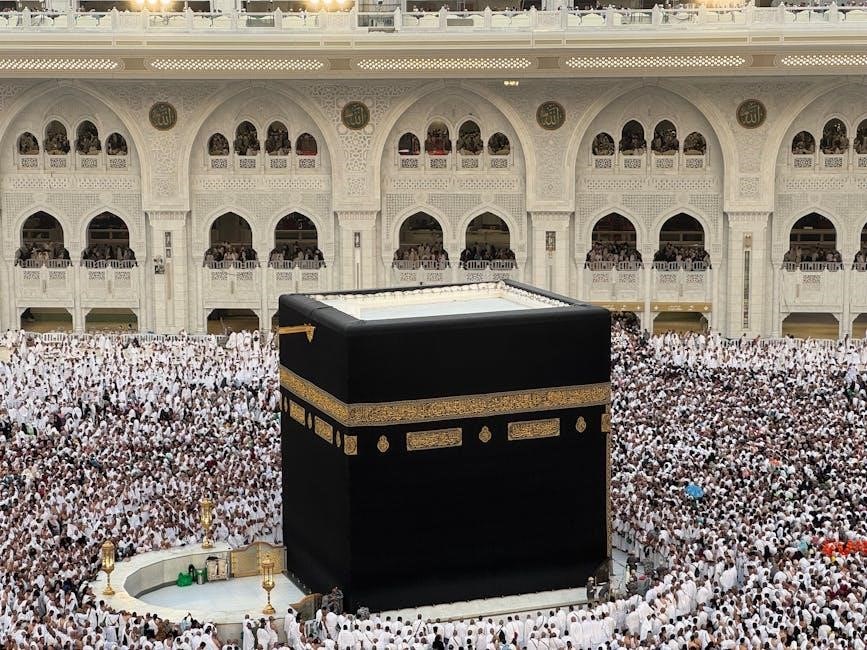
The COVID-19 pandemic necessitated significant adaptations, with restrictions on pilgrim numbers and stringent health protocols․ Technology plays an increasing role, with apps providing guidance, translation services, and real-time information․ Maintaining the spiritual essence of Hajj amidst modernization remains a key focus․
Allah tests faith through adversity, and the pandemic demonstrated the resilience of the pilgrimage․ Balancing tradition with innovation, and ensuring accessibility for all capable Muslims, are ongoing priorities in this sacred journey․